


The story
Municipal history
The municipality of Rana was originally established on 1 January 1838 (see formannskapsdistrikt law). In 1839, it was divided into Nord-Ranen Municipality and Sør-Ranen Municipality. In 1844, Nord-Ranen Municipality was renamed Mo Municipality and Sør-Ranen Municipality was renamed Hemnes Municipality. On 1 January 1923, the village of Mo was separated from Mo Municipality and became a town-municipality of its own. At that time (to avoid confusion) Mo Municipality changed its name (back) to Nord-Rana Municipality and the new town was known as Mo i Rana. During the 1960s, there were many municipal mergers across Norway due to the work of the Schei Committee. On 1 January 1964, the town of Mo (population: 9,616), Nord-Rana Municipality (population: 11,636), the northern part of Sør-Rana Municipality (population: 697), and the Sjona area of Nesna Municipality (population: 543) were all merged to form Rana Municipality.
Name
The municipality is named after the river Ranelva (Old Norse: Raðund). The name of the river is probably derived from the word raðr which means "quick", "fast", or "rapid". Another possibility is that the name comes from the old Sami god Rana Niejta.
On 16 February 2024, the national government approved a resolution to add a co-equal, official Sami language name for the municipality: Raane. The spelling of the Sami language name changes depending on how it is used. It is called Raane when it is spelled alone, but it is Raanen tjïelte when using the Sami language equivalent to "Rana Municipality".
Coat of arms
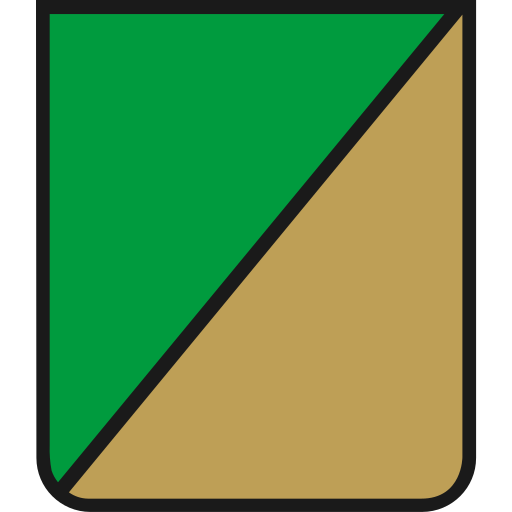
The coat of arms was granted on 5 March 1965. The official blazon is "Per bend sinister vert and Or" (Norwegian: Venstre skrådelt av grønt og gull). This means the arms have a field (background) that is divided by a diagonal line from the lower left to the upper right. The field that is below the line has a tincture of Or which means it is commonly colored yellow, but if it is made out of metal, then gold is used. The field that is above the line has a tincture of green. The arms symbolize the forests (upper part/green) and the minerals (lower part/gold), as there many minerals can be found in the area, especially iron ore. The arms were originally granted to the municipality of Mo on 29 April 1960 until that municipality was dissolved on 1 January 1964 when it became part of the new municipality of Rana. The arms were designed by Gunnar Alm.
Churches
The Church of Norway has six parishes (sokn) within Rana Municipality. It is part of the Indre Helgeland prosti (deanery) in the Diocese of Sør-Hålogaland.
From Wikipedia’s article on Rana Municipality, shared under CC BY-SA 4.0.5