

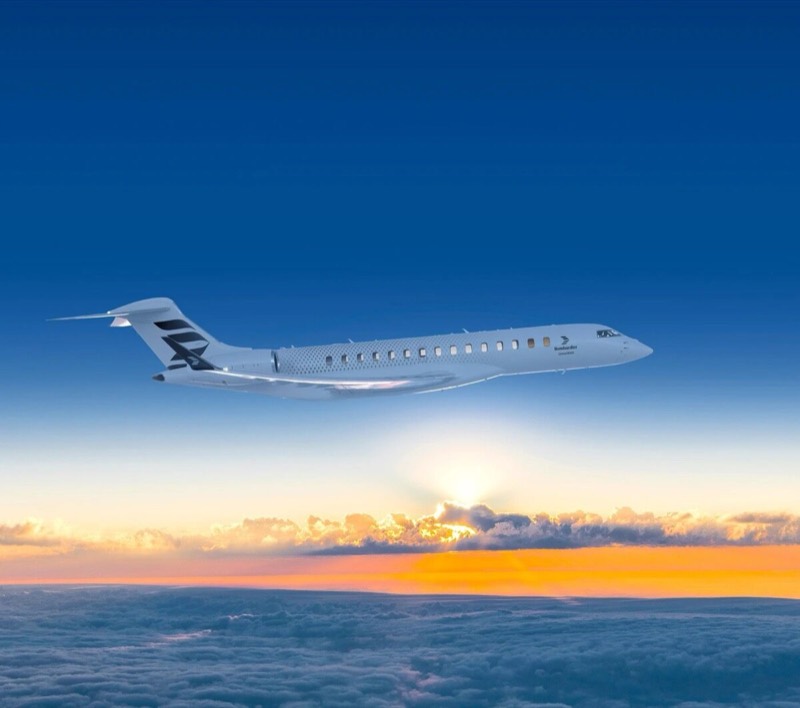
Plane · No signal
Bombardier Global 750027
Last reported Oct 10, 2026 at 14:43 UTC.
Ownership reported in the press, not confirmed from a registry. Listed owner: King Abdullah II.
Recent flights

King of Jordan since 1999
Abdullah II (Abdullah bin Hussein; born 30 January 1962) is the king of Jordan, having acceded to the throne on 7 February 1999. He is a member of the Hashemites, who have been the reigning royal family of Jordan since 1921, and is traditionally regarded as a 41st-generation direct descendant of the Islamic prophet Muhammad.2
From Wikipedia’s article on Abdullah II of Jordan (this version), CC BY-SA 4.0.
Born Jan 30, 1962.1
Abdullah was born in Amman, as the first child of King Hussein and his wife, Princess Muna. As the king's eldest son, Abdullah was heir apparent until Hussein transferred the title to Abdullah's uncle Prince Hassan in 1965. Abdullah began his schooling in Amman, continuing his education abroad. He began his military career in 1980 as a training officer in the Jordanian Armed Forces, later assuming command of the country's Special Forces in 1994, eventually becoming a major general in 1998. In 1993, Abdullah married Rania Al-Yassin, with whom he has four children: Crown Prince Hussein, Princess Iman, Princess Salma and Prince Hashem. A few weeks before his death in 1999, King Hussein named Abdullah his heir, and Abdullah succeeded his father.
Abdullah, a constitutional monarch, heads an authoritarian regime with wide executive and legislative powers. He liberalized the economy when he assumed the throne. In 2011, large-scale protests demanding reform erupted in the Arab world, which led to civil wars in some countries. Abdullah responded quickly to domestic unrest by replacing the government and introducing reforms. Proportional representation was reintroduced to the Jordanian parliament for the 2016 election, a move which he said would eventually lead to establishing a parliamentary government, but government critics remain skeptical, viewing the reforms as cosmetic changes. Power remains centralized in the king's hands. The reforms took place amid unprecedented challenges stemming from regional instability, including an influx of 1.4 million Syrian refugees.
Abdullah is known for promoting interfaith dialogue and a moderate understanding of Islam. The longest-serving current Arab leader, he is custodian of the Muslim and Christian religious sites in Jerusalem, a position held by his dynasty since 1924. The 2021 Pandora Papers revealed Abdullah's hidden wealth through offshore entities.
From Wikipedia’s article on Abdullah II of Jordan, shared under CC BY-SA 4.0.2
Abdullah was born on 30 January 1962 at Palestine Hospital in Al Abdali, Amman, to King Hussein and Hussein's British-born second wife, Princess Muna Al-Hussein (born Toni Avril Gardiner). He is the namesake of his paternal great-grandfather, Abdullah I, who founded modern Jordan. Abdullah's dynasty, the Hashemites, ruled Mecca for over 700 years—from the 10th century until the House of Saud conquered Mecca in 1925—and have ruled Jordan since 1921. The Hashemites are the oldest ruling dynasty in the Muslim world. According to family tradition, Abdullah is the 41st-generation agnatic descendant of Muhammad's daughter Fatimah and her husband, Ali, the fourth Rashidun caliph.
As Hussein's eldest son, Abdullah became heir apparent to the Jordanian throne under the 1952 constitution. Political instability caused King Hussein to appoint an adult heir in his place, choosing Abdullah's uncle Prince Hassan in 1965. Abdullah began his schooling in 1966 at the Islamic Educational College in Amman, and continued at St Edmund's School in England. He attended middle school at Eaglebrook School and high school at Deerfield Academy in the United States. He was the commencement speaker at Deerfield Academy's class of 2000 graduation.
Abdullah has four brothers and six sisters: Princess Alia, Prince Faisal, Princess Aisha, Princess Zein, Princess Haya, Prince Ali, Prince Hamzah, Prince Hashem, Princess Iman and Princess Raiyah; seven of them are paternal half-siblings.
From Wikipedia’s article on Abdullah II of Jordan (this version), CC BY-SA 4.0.
Occupation: monarch, writer, politician, military officer.8
He began his military career at the Royal Military Academy Sandhurst in England in 1980, while he was a training officer in the Jordanian Armed Forces. After Sandhurst, Abdullah was commissioned as a second lieutenant in the British Army and served a year in Britain and West Germany as a troop commander in the 13th/18th Royal Hussars (now the Light Dragoons).
Abdullah was admitted to Pembroke College, Oxford, in 1982, where he completed a one-year special-studies course in Middle Eastern affairs. He joined the Royal Jordanian Army on his return home, serving as first lieutenant and then as platoon commander and assistant commander of a company in the 40th Armored Brigade. Abdullah took a free-fall parachuting course in Jordan, and in 1985 he took the Armored Officer's Advanced Course at Fort Knox. He became commander of a tank company in the 91st Armored Brigade, with the rank of captain. Abdullah also served with the Royal Jordanian Air Force's anti-tank helicopter wing, receiving training to fly Cobra attack-helicopters.
The prince then attended the Edmund A. Walsh School of Foreign Service at Georgetown University in Washington, D.C., in 1987, undertaking advanced study and research in international affairs. He returned home to serve as assistant commander of the 17th Royal Tank Battalion in 1989, later being promoted to major. Abdullah attended a staff course at the British Staff College in 1990, and served the following year in the Office of the Inspector General of the Jordanian Armed Forces as the Armored Corps representative. He commanded a battalion in the 2nd Armored Cavalry Regiment in 1992 and was promoted to colonel the following year, commanding the 40th Brigade.
Abdullah met Rania Al-Yassin, a marketing employee at Apple Inc. in Amman, at a dinner organized by his sister Princess Aisha in January 1993. They became engaged two months later, and their marriage took place in June.
In 1994, Abdullah assumed command of Jordan's Special Forces and of other elite units as a brigadier general, restructuring them into the Joint Special Operations Command two years later. He became a major general, attended a course in defence-resources management at the American Naval Postgraduate School and commanded an elite special-forces manhunt in the pursuit of outlaws in 1998. The operation reportedly ended successfully, with his name chanted on the streets of Amman.
From Wikipedia’s article on Abdullah II of Jordan (this version), CC BY-SA 4.0.
In response to Islamophobic rhetoric after the 11 September attacks, Abdullah issued the Amman Message in November 2004. The Message is a detailed statement which encouraged Muslim scholars of all sects from around the world to denounce terrorism, practice religious tolerance and represent the true nature of the Muslim faith. The statement was adopted unanimously in a conference hosted by Abdullah in Amman in 2005 by 200 leading Islamic scholars. The Message stressed three points: the validity of all eight schools of Islam, the forbidding of takfir (declaration of apostasy) and standards for the issuance of fatwas. The Islamic religious consensus was unprecedented in contemporary times. Abdullah presented the Message in 2010 to the United Nations General Assembly, where he proposed a World Interfaith Harmony Week. The initiative was adopted, and is an annual celebration during the first week of February to promote peace and harmony among people of different faiths. Abdullah also established an award, based on this initiative, for interfaith dialogue.
The Al-Aqsa compound in Jerusalem was under Jordanian rule from 1948 to 1967; it was under Hashemite custodianship since 1924, during the reign of Abdullah's great-great-grandfather Sharif Hussein bin Ali. The legacy began when the Supreme Muslim Council, the highest body in charge of Muslim community affairs in Mandatory Palestine, accepted the sharif as custodian of the site. He restored the Jami’ Al-Aqsa and other mosques in Palestine. The sharif's son, King Abdullah I, is said to have personally taken charge of efforts to extinguish a fire which engulfed the Church of the Holy Sepulchre in 1949. Jami’ Al-Aqsa and the Dome of the Rock were restored four times by the Hashemites during the 20th century, and the custodianship became a Hashemite legacy given by Jordanian kings. In 2013, an agreement was signed between the Palestinian Authority and Abdullah, replacing the decades-old verbal agreement which was reinforced by the 1994 Israel–Jordan peace treaty. Jordan recalled its ambassador to Israel in 2014 following tensions at Al-Aqsa Mosque between Israelis and Palestinians concerned about Jordan's role in safeguarding Muslim and Christian sacred sites in Jerusalem. Abdullah met Israeli prime minister Benjamin Netanyahu in Amman in late 2014, and the Jordanian ambassador returned when Israeli authorities eased restrictions and revoked a decision that prevented men of all ages from praying at Al-Aqsa—for the first time in months.
In 2016, it was announced that Abdullah would fund the restoration of the Tomb of Jesus in the Church of the Holy Sepulchre. The Royal Hashemite Court informed Orthodox Patriarch Theophilos III of Jerusalem of the makruma (royal benefaction) in a 10 April 2016 letter. The tomb had been untouched since 1947, when the British installed steel support beams as part of a restoration project which never took place. It was reopened to the public on 22 March 2017 after the renovation. On 2 August 2017, Abdullah donated $1.4 million to the Jerusalem Islamic Waqf, the body that belongs to Jordan and is responsible for administering the Al-Aqsa mosque compound. An independent report estimates the total amount that the Hashemites have spent since 1924 on administering and renovating Jami’ Al Aqsa as over $1 billion.
In 2014, Abdullah received Pope Francis in Jordan, the third papal visit of his reign. The king, Queen Rania and Prince Ghazi accompanied the pope to Al-Maghtas, the site of Jesus' baptism, on the east bank of the Jordan River.
Abdullah led The 500 Most Influential Muslims' 2016 list, published by the Royal Islamic Strategic Studies Center, and was third on its 2018 list. Queen Rania was 35th on the 2016 list.
Leaders of the Church of the Holy Sepulchre sent out a letter of support to Abdullah on 1 March 2018 after Israel shelved a proposed bill that aimed to propose new tax measures to churches in the West Bank. "Your defence of religious freedom and Your leadership, in ensuring that the Status Quo is respected and maintained, has been crucial in our ongoing attempts to guard and protect the Christian presence especially in the Holy City of Jerusalem", the letter read.
King Abdullah met Rania Al-Yassin at a dinner party in January 1993. On 10 June 1993, they were married at Zahran Palace. King Abdullah and Queen Rania have four children:
Crown Prince Hussein (born 28 June 1994 at King Hussein Medical Center in Amman), married Rajwa Al Saif on 1 June 2023 at Zahran Palace in Amman, they have one daughter:
Princess Iman bint Al Hussein (born 3 August 2024 at King Hussein Medical Center in Amman)
Princess Iman (born 27 September 1996 at King Hussein Medical Center in Amman), married Jameel Alexander Thermiótis on 12 March 2023 at Beit Al Urdun Palace in Amman, they have three daughters:
Amina Thermiótis (born 16 February 2025 at Prince Hashem bin Abdullah II Hospital in Aqaba)
Talia Thermiótis (born 14 August 2026)
Rania Thermiótis (born 14 August 2026)
Princess Salma (born 26 September 2000 at King Hussein Medical Center in Amman)
Prince Hashem (born 30 January 2005 at King Hussein Medical Center in Amman)
The ruler of Dubai, Sheikh Mohammed Al-Maktoum, was married to Abdullah's half-sister Princess Haya.
Abdullah published an autobiography, Our Last Best Chance: The Pursuit of Peace in a Time of Peril, in 2010. He documents the first decade of his rule in a manner similar to his father's 1962 book, Uneasy Lies the Head. Abdullah's book contains insights into his childhood and behind-the-scenes accounts of encounters with political figures.
Abdullah has listed skydiving, motorcycling, water sports and collecting ancient weapons as his interests and hobbies, and is a fan of the science-fiction series Star Trek. In 1996, he appeared briefly in the Star Trek: Voyager episode "Investigations", in a non-speaking role.
The king promotes tourism in Jordan, and was a tour guide for Discovery Channel travel host Peter Greenberg on Jordan: The Royal Tour. In the program, Abdullah said that he is no longer permitted to skydive since he became king. He reportedly motorcycled through northern California on a Harley-Davidson. Prince Ali bin Al Hussein, one of Abdullah's brothers and president of the Jordan Football Association, has said that the king is the Jordan national football team's biggest fan. His interest in the film industry influenced his decision to create the Red Sea Institute of Cinematic Arts in the Red Sea coastal town of Aqaba on 20 September 2006, in partnership with the University of Southern California School of Cinematic Arts. When the producers of Transformers: Revenge of the Fallen decided to film in Jordan, Abdullah called on military helicopters to help transport equipment into Petra. In 2016, the king honored the cast of Theeb, the first Jordanian film nominated for an Oscar.
Abdullah also enjoys stand-up comedy. When Gabriel Iglesias, Russell Peters and a number of other stand-up comedians visited Jordan for a 2009 comedy festival, the king invited them over for dinner. In 2013, a video of Abdullah helping push a car stuck in snow in Amman during the 2013 Middle East cold snap went viral. In 2017, another amateur video that went viral showed Abdullah wearing pyjamas helping in extinguishing a fire in a wood near the royal palace.
Abdullah owns an international network of real estate properties, valued in excess of $100 million. His ownership of the properties was disguised through a series of offshore companies incorporated in the British Virgin Islands. Abdullah's property empire was disclosed in the Pandora Papers leak, which revealed ownership of three contiguous oceanfront estates in the Point Dume area of Malibu, and properties in Washington, D.C., London and Ascot. His lawyers denied any misuse of public funds or tax evasion and stated that they were bought from the monarch's private wealth and through offshore companies for security and privacy reasons. A 2022 Credit Suisse leak revealed that Abdullah owned six secret accounts, including one whose balance exceeded $224 million. A Royal Court statement said that the funds were a result of selling an Airbus A340 plane that belonged to his father the late King Hussein for $212 million, and that it was replaced with a smaller, less costly Gulfstream aircraft.
From Wikipedia’s article on Abdullah II of Jordan (this version), CC BY-SA 4.0.
Abdullah was criticized during his early years for focusing on economic, rather than political reform. A committee was formed in February 2005 to formulate a blueprint for political reform in the country for the next decade. This National Agenda, finalized about nine months later, was never implemented. It included incorporating proportional representation into general elections, improving the judicial branch and respect for human rights, and tackling issues related to employment, welfare, education and infrastructure. The Agenda was reportedly never implemented due to conservative opposition. After the Arab Spring, a new election law in 2012 was enacted and used in the 2013 elections. It incorporated elements of proportional representation, and 27 of the 150 House of Representatives members could be elected accordingly. A number of political reforms were undertaken to curtail some of the king's powers, including amending about one-third of the constitution, establishing a constitutional court and the Independent Election Commission and improvements to laws governing human rights and freedom of speech and assembly.
In 2014 and 2016, several constitutional amendments sparked controversy despite their overwhelming approval by senators and representatives. The amendments gave the king sole authority to appoint his crown prince, deputy, the chief and members of the constitutional court, the heads of the military and paramilitary forces and the country's General Intelligence Director. Proponents said that the amendments solidified the separation of powers, while critics claimed they were unconstitutional.
Reforms introduced in the 2016 general election led Freedom House, a US-funded non-governmental organization, to upgrade Jordan to "partly free" from "not free" in its Freedom in the World 2017 report. According to the report, Jordan became the third most free Arab country, and that the change was "due to electoral law changes that led to somewhat fairer parliamentary elections."
In September 2016, Abdullah formed a royal committee to make recommendations which would improve the country's judiciary. The committee finalized its report, which revolved around strengthening judicial independence and improving criminal justice, in February 2017. The Parliament approved the recommendations which included increased protection for women against violence and better trial procedures. A new law for people with disabilities was also enacted. Human Rights Watch praised the reforms.
On 15 August 2017, local elections were held for municipal councils, local councils, and governorate councils, which were added by a new decentralization law. The law intends to cede some central-government power to elected councils, increasing citizen participation in municipal decision-making. In a 15 August 2016 interview, Abdullah described the new decentralization law as "a very important link in the chain of reforms".
On 10 June 2021, Abdullah announced the introduction of a new committee of 92 members chaired by former prime minister Samir Rifai. The tasks of the committee are to modernise the political system and to propose new laws for local governments. On 4 October 2021, the committee handed over its recommendations to Abdullah. The committee proposed draft laws for political parties and elections, as well as 22 amendments to the Jordan constitution regarding parliamentary work and empowering women and youth. In November 2021, Abdullah ordered the government to push for political modernization. The Cabinet of Jordan submitted draft laws to the parliament following the committee's recommendations. In December 2021, a parliamentary discussion on the constitutional amendment that would give more rights to women resulted into a fistfight between members of parliament. On 3 January 2022, the Jordan parliament passed an amendment to Article 40 of the constitution, which allows Abdullah to appoint or dismiss the chief justice, the head of the Sharia judicial council, the Grand Mufti of Jordan, the chief of the Royal Court, the minister of the court, and the advisors to the king. On 6 January 2022, Jordan parliament approved constitutional reforms by a majority of 104-8 including improvement of women's rights, lowering the minimum age for elected deputies to 25 and the prime minister being elected by the assembly's largest single party.
From Wikipedia’s article on Abdullah II of Jordan (this version), CC BY-SA 4.0.
A position is the aircraft’s or vessel’s, not the person’s. Being on board isn’t confirmed.
Plane · No signal
Last reported Oct 10, 2026 at 14:43 UTC.
Ownership reported in the press, not confirmed from a registry. Listed owner: King Abdullah II.
Recent flights
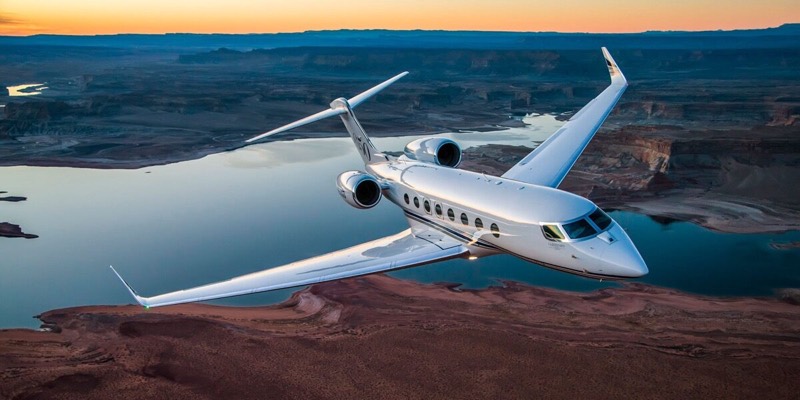
Plane · No signal
Last reported Jun 17, 2026 at 09:44 UTC.
Ownership reported in the press, not confirmed from a registry. Listed owner: King Abdullah II.
Flight data: adsb.lol (ODbL) & ADSB.fi. Flights, photos and icons: CelebPlanes. Maps: Esri.
The numbers on this page point here. Each one links to the record it came from.